

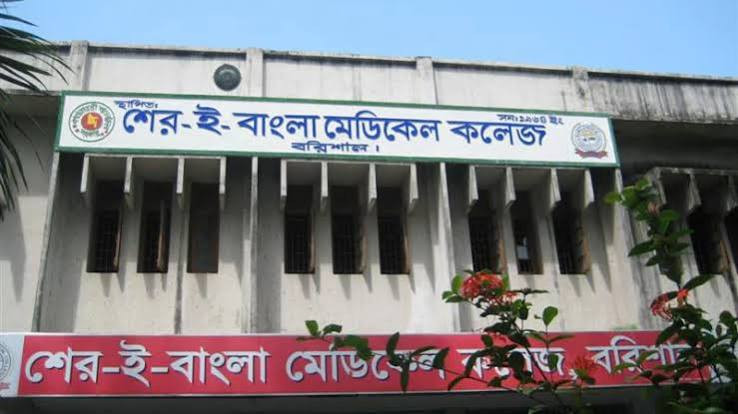
 Specialty
 Location
Department:- Medicine Specialist, Child Specialist, Dermatologist, General Surgeon, Gynecologist, Skin speciality,
Sher-e-Bangla Medical College Hospital, universally known as SBMCH, is the largest and most important public hospital in Bangladesh's entire Barisal Division. Construction began under the name Barisal Medical College back in November 1964, the college opened to students in 1968, and the institution was renamed in 1977 in honour of A.K. Fazlul Huq, the Barisal-born former prime minister nicknamed "Sher-e-Bangla," the Tiger of Bengal. The hospital started out with 250 beds and has since grown into a 1,000-bed teaching hospital spread across an 81.5-acre campus, serving as the referral hospital of last resort for millions of people across the southern coastal belt.
That scale brings a level of strain that smaller district hospitals don't quite face in the same way. A long-running Daily Star investigation found that more than 43 percent of the hospital's sanctioned doctor posts, 97 out of 224, sat vacant for an extended period, even as around 2,000 patients remained admitted at any given time and thousands more passed through outpatient services daily. The hospital's own director at the time, Dr Md Bakir Hossain, confirmed the numbers, and a ward registrar noted that individual doctors were effectively covering five times their normal patient load. During the Covid-19 pandemic, the crisis briefly deepened further, with over half the hospital's already-thin doctor roster sidelined by infection or quarantine at once, leaving a skeleton crew managing thousands of daily patients.
More recently, SBMCH found itself at the centre of a very different and far more disruptive episode. In August 2025, the hospital became a flashpoint for Bangladesh's broader Health Sector Reform Movement, when a 16-day student protest campaign over alleged mismanagement and irregularities at the hospital escalated into physical clashes. Protesters and hospital staff traded accusations after Dr Dilip Kumar Roy, a medicine unit officer, and ten other staff members were injured in a confrontation involving bricks and stones outside the hospital gate. In response, intern doctors launched an indefinite strike, suspending all services except emergency care for several days running, while senior doctors, nurses, and other staff staged a counter-protest of their own demanding safety guarantees. The standoff eventually ended after police made an arrest connected to the assault on staff and the interns called off their strike, though the underlying reform demands that triggered the unrest were part of a nationwide movement rather than something specific to SBMCH alone.
Phone: +8804312173547 (also reachable via the national hotline 16263)
Email: sbmch@hospi.dghs.gov.bd
Address: Band Road, Chandmari, Barisal-8200
Google Maps: https://maps.app.goo.gl/7mQpZLUuWu9v7GgE6
Given the hospital's history of doctor shortages and occasional service disruptions during periods of unrest, calling ahead for anything non-urgent is a sensible precaution.
Founded: Construction began in 1964 under the name Barisal Medical College, opened to students in 1968, and was renamed Sher-e-Bangla Medical College in 1977.
Speciality: The largest government tertiary hospital in the Barisal Division, functioning as the primary referral centre for patients across the entire southern coastal region of Bangladesh.
Number of Beds: Grew from an original 250-bed facility to a 1,000-bed teaching hospital today, spread across roughly 81.5 acres, though reporting has repeatedly noted patient numbers running well past sanctioned capacity.
Departments: A full range of medical college hospital departments including Medicine, Surgery, Gynaecology & Obstetrics, Paediatrics, Neurology, Cardiology, Orthopaedics, Gastroenterology, Dermatology, Oncology, and Nephrology, alongside undergraduate and postgraduate medical training. A persistent doctor vacancy rate, historically over 40 percent of sanctioned posts, means specialist availability can vary, so confirming ahead of a visit is worthwhile.
Popular Treatments: General and specialist outpatient consultation, emergency and trauma care, inpatient treatment across all major disciplines, and referral-level care for patients from smaller district hospitals across the Barisal Division who need more advanced treatment than local facilities can provide.
A verified, fully current department-wise doctor list was not confirmed through available public sources for this page, though several third-party directories list individual consultants by department. Given the hospital's documented history of significant doctor vacancies, confirming specialist availability by phone ahead of a visit is a sensible step - please verify.
Outpatient (OPD) consultation across all major specialties. Emergency and trauma care. Indoor admission (1,000 beds, though occupancy has repeatedly been reported as running well beyond sanctioned levels). Operation theatres and surgical services. Diagnostic and laboratory services. Medical college training facilities, including student dormitories and residences for teaching staff.
Please confirm current department-specific availability directly with the hospital, since staffing levels have fluctuated significantly at different points and services have occasionally been disrupted during periods of unrest.
As with most government medical college hospitals in Bangladesh, OPD hours generally run 8:00 AM to 2:30 PM, except on government holidays, though emergency services operate around the clock. Given the hospital's consistently high patient volume, arriving early is advisable - please confirm exact hours directly with the hospital.
The hospital is located on Band Road in the Chandmari area of Barisal city, making it centrally accessible from within the city itself. As the region's main referral hospital, it also receives a steady flow of patients transferred in from district and upazila-level facilities throughout the Barisal Division, so travel times can vary considerably depending on the originating district.
Google Maps link: https://maps.app.goo.gl/7mQpZLUuWu9v7GgE6
As the largest and best-equipped public hospital in the entire Barisal Division, it offers a breadth of specialist departments, including cardiology, neurology, nephrology, and oncology, that smaller district hospitals in the region simply don't have. Its status as a teaching hospital means a large pool of doctors, interns, and faculty are present on campus, even during periods when specific specialist posts sit vacant. It functions as the definitive referral point for serious or complex cases from across southern Bangladesh, reducing the need to travel all the way to Dhaka for many conditions. Its scale and public profile also mean that systemic issues, whether staffing shortages or the 2025 unrest, tend to draw significant media and government attention, which has historically kept pressure on authorities to respond.
Hospital Name: Sher-e-Bangla Medical College Hospital (SBMCH)
Founded: Construction began 1964; opened 1968; renamed 1977
Location: Band Road, Chandmari, Barisal-8200
Ownership: Directorate General of Health Services (DGHS), Government of Bangladesh, affiliated with the University of Dhaka
Number of Beds: 1,000 (expanded from an original 250)
Type: Government Medical College Hospital (Tertiary/Divisional Referral Hospital)
Emergency Service: Available 24 hours, though non-emergency services have occasionally been disrupted during periods of unrest - please verify current status
Outdoor (OPD) Timing: 8:00 AM to 2:30 PM, except government holidays - please verify
Phone: +8804312173547 (national hotline: 16263)
Email: sbmch@hospi.dghs.gov.bd
Answer: The hospital has grown from an original 250-bed capacity when it opened in 1968 to a 1,000-bed facility today, though patient numbers have repeatedly been reported as exceeding this sanctioned capacity.
Answer: Historically, yes. A Daily Star investigation found more than 43 percent of sanctioned doctor posts (97 of 224) vacant for an extended period, a gap that widened further during the Covid-19 pandemic when illness and quarantine sidelined much of the remaining staff.
Answer: The hospital became a focal point of Bangladesh's nationwide Health Sector Reform Movement. A 16-day student protest escalated into a clash that injured a medicine unit doctor and ten other staff members, prompting an intern strike that suspended non-emergency services for several days before the situation was resolved following an arrest connected to the assault.
Answer: Yes, it is the largest public hospital in the Barisal Division and functions as the primary referral centre for patients from district and upazila-level hospitals across the region who need more advanced or specialist care.
Answer: Construction began in 1964 under the name Barisal Medical College, the institution opened to students in 1968, and it was renamed Sher-e-Bangla Medical College in 1977 in honour of former prime minister A.K. Fazlul Huq.
The information on DoctorInfoBD.com is provided for general informational purposes only. While we strive to keep all doctor, hospital, and appointment information accurate and up to date, some details may be incorrect, incomplete, or outdated. Please verify all information directly with the respective hospital or healthcare provider before making any medical or appointment decisions. In case of a medical emergency, contact the hospital's emergency department or the national emergency number immediately, rather than relying solely on this page. This content does not constitute medical advice, diagnosis, or treatment; always consult a qualified doctor for any health-related decision.
Get all the latest updates easily